Rocky Tolbert
Oct 16 2026 13:00
Quick SummaryWhen you turn the heat on for the first time this fall, a faint burning-dust smell for the first 15 to 30 minutes is usually normal after the system has sat idle for months. Lingering...
Quick Summary
When you turn the heat on for the first time this fall, a faint burning-dust smell for the first 15 to 30 minutes is usually normal after the system has sat idle for months. Lingering odors, burning-plastic or electrical smells, a rotten egg gas smell, repeated clicking without ignition, or cold air coming from the vents are reasons to turn the system off and call a professional. With Georgia fall weather swings, many Paulding County homes bounce between heating and cooling for weeks, so it helps to know what is expected and what deserves attention.
Sun-Glo Heating & Air Conditioning, Inc. has helped local families stay comfortable since 1989. As a family-owned company serving Dallas, Hiram, Powder Springs, Marietta, Smyrna, Rockmart, Yorkville, and surrounding areas of Paulding and Cobb counties, we know first-of-season heating concerns can be unsettling, especially when the weather turns cool overnight.
That Burning Smell When You First Turn On the Heat
The most common first-use concern is a light dusty or slightly burning smell. During a long Georgia summer, dust can settle on parts that become hot when your heating system starts running. In a gas furnace, that includes the heat exchanger, which is the metal component that transfers heat into the air without mixing combustion gases with the air in your home. In an electric heat pump or electric air handler, dust may burn off the heat strips, which are electric heating elements that warm the air.
That smell should be mild and should fade within about 15 to 30 minutes of normal operation. Opening a window briefly can help clear the odor while the dust burns away. If it disappears quickly and your system is producing warm air normally, it is generally not a cause for alarm.
What is not normal is an odor that gets stronger, remains after the first half hour, returns every time the heat runs, or smells like melting plastic, hot wiring, smoke, or something chemical. Turn the system off at the thermostat and contact Sun-Glo. Electrical odors and burning-plastic smells can point to overheating components, damaged wiring, or other issues that should be inspected safely by a trained technician.
A gas smell requires a different response. If you smell rotten eggs or sulfur, treat it as a possible gas leak. Leave the home immediately, avoid using switches, phones, appliances, or anything that could create a spark, and call the gas utility first from a safe location. After the utility has addressed the immediate safety concern, call an HVAC company for an inspection. Do not try to locate the leak yourself or open the furnace cabinet.
Strange Noises After a Long Summer Off
Your heating system may make a few sounds that are completely ordinary when it starts after months of downtime. A thermostat click is normal when the thermostat tells the system to begin heating. A gas furnace may make a brief whoosh as the burners ignite. You may also hear light ticking from ductwork as metal expands and adjusts to warmer air. These sounds should be brief and should not become louder or more frequent.
Pay attention to sounds that are sharp, harsh, or repetitive. Banging can indicate a loose or damaged component. Squealing may point to a blower motor or belt-related issue in systems that use belts. Grinding can signal a motor or moving-part problem. Repeated clicking without heat is also a concern, particularly if the system keeps trying to start but never produces warm air. That can mean the ignition sequence is failing, and continued attempts may not solve the problem.
When a noise seems wrong, turn the system off and let a professional evaluate it. You can learn more about common HVAC problems in local homes, but an unfamiliar sound is always worth taking seriously when it affects your heat.
Why Some Rooms Stay Cold
It is frustrating when the living room feels comfortable but a bedroom, office, or back corner of the house stays chilly. Before assuming the furnace has failed, check whether every supply vent is open and uncovered. Furniture, rugs, curtains, and storage bins can block airflow. Closing vents in unused rooms may seem like a way to save energy, but it can disrupt airflow and make the system work harder than it should.
A dirty air filter is another common reason for weak airflow. The filter catches dust and debris before they reach the equipment, but a clogged filter can restrict the amount of air moving through the system. Check the filter size and direction of the arrow before replacing it. If the filter is visibly dirty, replace it with the correct type for your system.
If open vents and a clean filter do not improve the room, the issue could involve ductwork, airflow balance, insulation, or equipment performance. Ducts can develop leaks, loose connections, or restrictions that keep warm air from reaching part of the home. These problems need professional diagnosis, but you do not need to take apart vents or access internal equipment to begin with the simple checks.
Thermostat Settings That Trip People Up
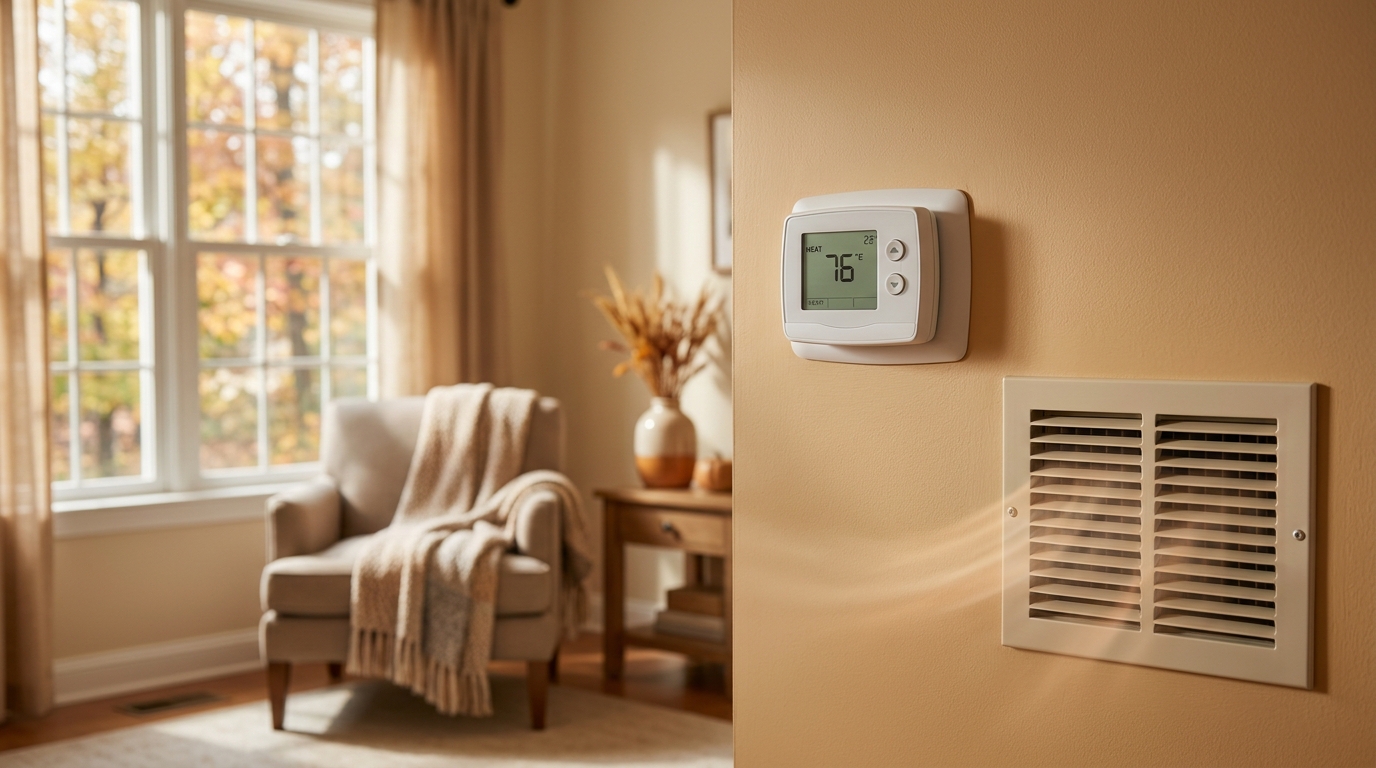
Many no-heat calls come down to a thermostat setting, especially during the first cool spell. Start by confirming the thermostat is set to Heat, not Cool or Off. Set the temperature several degrees above the current room temperature, then give the system a few minutes to respond. Some systems have a brief startup delay, so immediate airflow is not always expected.
Also check the fan setting. When the fan is set to Auto, it runs only while the system is actively heating or cooling. When it is set to On, the fan runs continuously, even between heating cycles. If the fan is set to On, you may feel room-temperature or cool air from the vents while the heat is not actively running. That does not necessarily mean the heating system is broken, but switching the fan back to Auto can make the operation clearer.
If your thermostat uses batteries, replace them if the display is blank, dim, erratic, or showing a low-battery warning. A thermostat that has lost power may not be able to communicate with the HVAC system correctly. Avoid removing the thermostat from the wall or trying to adjust wiring. Fresh batteries and correct settings are safe homeowner checks. Wiring and control issues are work for a technician.
Simple Checks Before You Call
If your heat is not coming on, a few safe checks can sometimes identify a simple issue:
-
Confirm the thermostat is set to Heat and the temperature is above the room temperature.
-
Set the fan to Auto so you can tell whether the system is actively producing heat.
-
Replace thermostat batteries if your thermostat uses them and the display indicates they are low.
-
Check the air filter and replace it if it is dirty or clogged.
-
Make sure supply vents are open and not covered by furniture, rugs, or other items.
-
Check your electrical panel for a tripped HVAC breaker. If it has tripped, reset it once. If it trips again, leave it off and call for service.
Do not remove furnace panels, open the furnace cabinet, touch wiring, or try to relight or repair internal components. Modern heating equipment has safety controls for a reason, and a professional can test the system without putting your household at risk.
When It's Time to Call Sun-Glo
Call Sun-Glo Heating & Air Conditioning, Inc. if the heat does not come on after you have checked the thermostat, batteries, filter, vents, and breaker. It is also time to call if you have a persistent burning smell, an electrical odor, strange loud noises, repeated clicking with no ignition, uneven heating that does not improve, or cold air when the system should be heating.
If you smell rotten eggs or suspect a gas leak, leave first and call the gas utility from a safe place. Once the immediate gas safety issue has been addressed, Sun-Glo can inspect the heating equipment. For other urgent situations, our team offers same-day and 24/7 emergency service. Review when an HVAC issue counts as an emergency
if you are unsure whether the problem needs immediate attention.
Our technicians provide dependable heating repair and installation
for homeowners throughout Dallas and nearby communities. From our location at 65 Antioch Road, Suite A in Dallas, Georgia, Sun-Glo is ready to help families throughout Paulding and Cobb counties get clear answers and practical repairs.
Most first-of-season heating quirks are minor, but you should not have to wonder whether an unusual smell, sound, or cold room is safe to ignore. Sun-Glo Heating & Air Conditioning, Inc. can diagnose anything that smells, sounds, or feels wrong and help get your house warm again. Call (770) 505-0015 or reach out through our contact page for help.